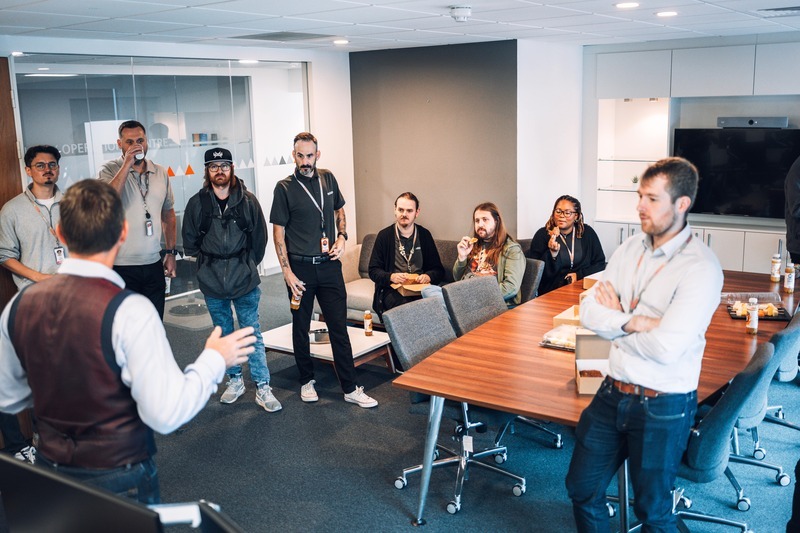

Fortinet Accelerate 2026 brought together thousands of partners, customers and industry leaders to discuss the future of cybersecurity, networking and digital resilience.
Across three days of sessions, several themes consistently emerged. While many of the discussions were global in nature, the insights are particularly relevant for UK mid-market organisations, which often face the same cyber threats and technology complexity as larger enterprises but with fewer internal resources.
The message from Accelerate was clear. Cybersecurity is entering a new phase defined by platform consolidation, AI-driven operations and increasing demand for managed services.
Here are the key takeaways and what they mean for businesses today.
1. Cyber Security Is Moving from Tools to Platforms
For many organisations, cybersecurity environments have grown organically over time. Different tools have been introduced to address specific risks, often through separate projects or procurement cycles. The result is that many organisations now operate dozens of security products, each generating alerts and data but often sharing limited intelligence.
One of the strongest themes from Accelerate was the shift towards integrated security platforms. Fortinet’s strategy, built around the FortiOS platform, is designed to unify networking, security and operations capabilities across areas such as:
- Network security
- Secure SD-WAN
- Secure Access Service Edge (SASE)
- Security operations
- Operational technology security
- AI security and governance
For organisations, the benefit is not simply vendor consolidation. It is the ability to simplify operations, improve visibility and allow security tools to work together more effectively. Reducing complexity is increasingly recognised as one of the most important steps organisations can take to strengthen their cyber resilience
2. Secure Networking and SASE Are Reshaping Connectivity
Modern organisations rely heavily on cloud services, SaaS applications and hybrid workforces. Traditional network architectures were not designed for this level of distributed access.
Accelerate highlighted how secure networking is evolving, with Secure SD-WAN and SASE becoming the foundation for modern enterprise connectivity.
Secure SD-WAN provides:
- intelligent routing across multiple network paths
- consistent security inspection
- Improved performance for cloud and SaaS applications
SASE extends this model by delivering security controls closer to users and cloud services. Together, these technologies enable organisations to connect branches, remote workers and cloud environments securely and consistently. For mid-market businesses, this architectural approach provides a practical way to improve both security posture and user experience.

3. AI Is Transforming Both Cyber Attacks and Cyber Defence
Artificial intelligence was one of the most prominent themes throughout the conference. AI is now accelerating the cyber threat landscape by enabling attackers to automate reconnaissance, phishing campaigns and vulnerability exploitation.
At the same time, AI is becoming an important capability for defenders. Security platforms are increasingly using AI to:
- detect behavioural anomalies
- automate threat investigation
- prioritise alerts
- accelerate incident response
However, organisations are also facing a new challenge: shadow AI usage. Many employees are already using generative AI tools in their day-to-day work, often without visibility or governance from security teams.
Without appropriate controls, this can lead to sensitive information being shared with external AI services. As AI adoption grows, organisations will need stronger AI governance, monitoring and security controls to ensure that innovation does not introduce additional risk.
4. Managed Security Services Continue to Grow
Another major theme from Accelerate was the rapid growth of managed security services. The global cybersecurity market is estimated to exceed $300 billion, with the majority delivered through service providers. This growth is being driven by several factors:
- increasing sophistication of cyber attacks
- expanding digital attack surfaces
- growing regulatory and compliance requirements
- a global cybersecurity skills shortage
Building and operating a fully staffed internal security operations capability is extremely difficult for many organisations. As a result, many businesses are turning to managed services to provide capabilities such as:
- Security operations monitoring
- Threat detection and response
- Managed SASE and secure networking
- Vulnerability management and risk assessment
For UK mid-market organisations, this model allows access to enterprise-grade cybersecurity capabilities without the need to build large in-house teams.
5. Security Is Moving Closer to the Network and Infrastructure
Another important theme from the conference was how cybersecurity is becoming embedded across network infrastructure itself. This includes:
- LAN and wireless security
- network access control
- device visibility
- segmentation of connected systems
As organisations deploy more IoT devices, operational technology systems and connected equipment, understanding what is connected to the network becomes increasingly important. Security capabilities that extend across WAN, LAN, wireless and endpoint environments provide organisations with much stronger control over their digital environments.

6. Operational Technology Security Is Rising in Importance
Operational technology (OT) security was also a key topic across several sessions. Industrial systems in sectors such as manufacturing, utilities, transport and logistics are becoming increasingly connected through digital transformation initiatives.
While this connectivity enables improved operational efficiency, it also introduces new cybersecurity risks. Many OT environments include legacy systems that cannot easily be updated or patched, which means organisations must rely on controls such as:
- network segmentation
- asset visibility
- threat detection
- virtual patching
As IT and OT environments continue to converge, securing operational technology will become a growing priority for many organisations.
What This Means for UK Mid-Market Businesses
For UK mid-market organisations, the overall direction of travel is clear. Cybersecurity is becoming:
- more integrated
- more automated
- more data-driven
- more pervasive across the network
At the same time, the threat landscape continues to evolve rapidly. Organisations should focus on several practical priorities:
- reducing unnecessary security complexity
- improving visibility across networks and devices
- Introducing governance around AI usage
- adopting modern secure networking architectures
- leveraging managed services where appropriate
By simplifying security architectures and ensuring technologies work together effectively, businesses can significantly improve their ability to detect threats, respond quickly and maintain operational resilience.
Supporting Mid-Market Organisations with Modern Cyber Security
At Node4, we work with organisations across the UK mid-market to help them navigate this rapidly changing cybersecurity landscape.
Through a combination of secure networking, SASE, security operations and managed services, we help businesses simplify their security environments while strengthening their resilience against modern threats.
The insights from Fortinet Accelerate reinforce the direction many organisations are already taking: building integrated security platforms that can evolve alongside the business.