“Frontier firm” is one of those phrases you hear a few times and instinctively file under marketing. But spend a bit longer with it, and it starts to feel less like a label and more like a signal.
Because something is shifting.
AI is starting to shape how work actually gets done. And that’s creating a noticeable gap between businesses that are leaning into that reality and those still circling it.
What is a Frontier Firm?
A Frontier Firm is a term used by Microsoft to describe organisations leading the next wave of business transformation through AI, data, and automation. Unlike traditional digital businesses, Frontier Firms embed AI directly into their operations, decision-making, and workflows. This allows them to move faster, reduce manual effort, and continuously improve how work gets done.
In simple terms, a Frontier Firm is an organisation that has moved from experimenting with AI to operating with it as a core part of the business.
A view happening from the ground: how AI Adoption is really happening
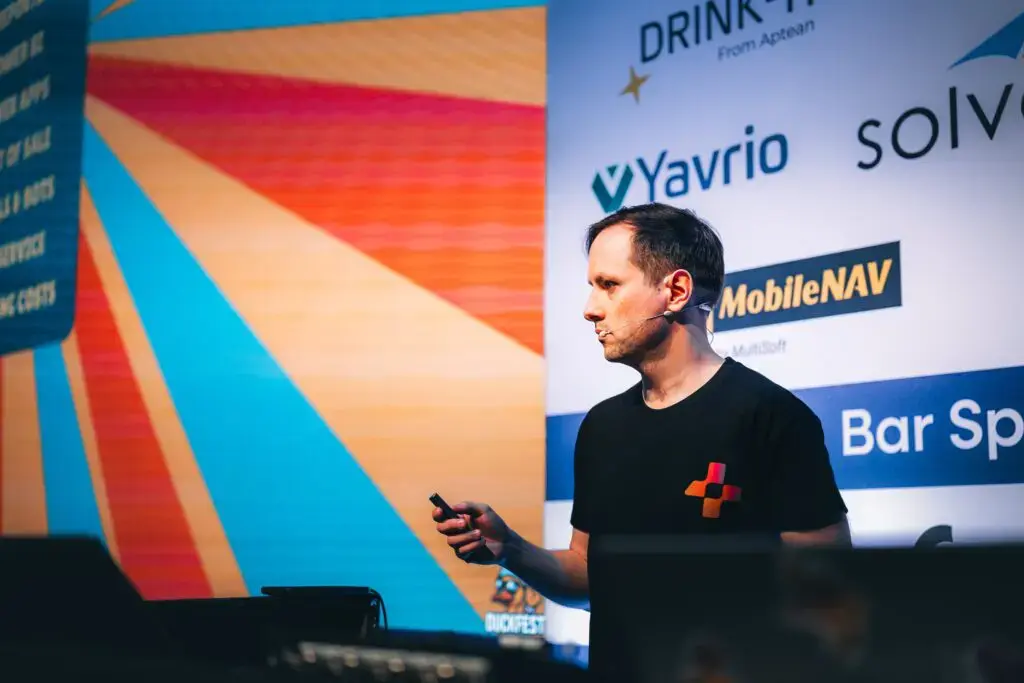
When our Technology & Innovation Director, Mark, attended Microsoft’s SME&C EMEA Summit last October, it was a phrase that kept coming up. With real emphasis on taking an AI-first approach, whilst keeping people at the centre of it. AI-first, but human-led.
At the time, not everything being discussed was public. But since then, the same themes have surfaced again and again across industry events, announcements, and customer conversations. This isn’t just about adopting new technology. It’s about changing how organisations operate with AI. Most organisations have already started their AI adoption journey. They’ve trialled tools like Microsoft Copilot, explored use cases, and rolled out pilots to small teams. On paper, they’re “doing AI.”
- Trialling Microsoft Copilot
- Exploring AI use cases
- Running pilot projects
But that’s not the same as transforming the business.
It’s less about a specific technology, and more about what happens when AI becomes part of the normal flow of work.
Mark Wilson, Technology and Innovation Director
The future of AI Adoption in business
From our perspective, this is where the real divide starts to open up. It’s not between organisations that have AI and those that don’t. That’s already becoming irrelevant. It’s between those that are structuring themselves around it and those that are still treating it as an add-on.
The real divide is between:
- Organisations embedding AI into how they operate
- Organisations treating AI as an add-on
Once AI is embedded properly, it starts to compound. Decisions happen quicker, bottlenecks reduce, and people spend less time wading through admin and more time actually moving things forward. On the flip side, organisations that haven’t quite got there yet don’t stand still. They just move more slowly, often without realising it.
Why most AI Adoption strategies stall
There’s a version of this conversation that says you either lead from the front or you follow behind. In reality, most organisations sit somewhere in the middle. And that’s where things tend to stall.
We tend to see two patterns emerge. Frontier Firms, who are actively reshaping how they operate around AI, and fast followers, who take proven approaches and scale them at the right time. Both approaches can work. But drifting between the two is where progress slows.
There was a lot of experimentation, but also a sense that many organisations hadn’t quite worked out how to turn that into something scalable.
Mark Wilson – Technology and Innovation Director
A bit of experimentation and a few tools in play. Some progress, but not enough to really change outcomes. It feels like movement, but it rarely translates into momentum. That’s usually where frustration creeps in. Teams are busy, investment is happening, but the impact isn’t landing in a meaningful way.
We typically see two emerging patterns:
Frontier Firms – organisations actively reshaping themselves to be AI-first
Fast Followers – organisations adopting proven approaches once patterns are established
This is where frustration builds:
- Investment increases
- Activity increases
But outcomes do not, it feels like progress. But it is not momentum.
You don’t have to be first, but you do have to decide
Not every organisation needs to lead from the front. There’s a strong case for being a fast follower. Learning from what works, avoiding unnecessary noise, and scaling the right things at the right time. But the keyword there is decision.Because what doesn’t work is hesitation.
Without clear foundations, data, platform, security… most AI initiatives don’t really move beyond experimentation.
Mark Wilson – Technology and Innovation Director
In a market moving this quickly, hesitation has a cost. Not instantly, but steadily. Usually in time, effort, and missed opportunity.
Why data foundations matter for AI Adoption
For all the talk of AI, the fundamentals are still doing most of the heavy lifting. If your data is fragmented, AI will struggle to deliver anything meaningful. If your platforms don’t talk to each other, progress slows down. If security and governance aren’t where they need to be, trust becomes a blocker.
What is new is how quickly those gaps get exposed. AI highlights weaknesses in data and systems faster than most organisations expect. This is why a modern data platform is critical to any successful AI adoption strategy. The biggest barrier to AI adoption is not the AI itself. It is the foundation beneath it.
- Fragmented data
- Disconnected platforms
- Weak governance
- Security concerns
What actually makes Frontier business
It’s not about how many tools you’ve deployed, or how advanced the tech stack looks from the outside. It’s about whether technology is genuinely changing outcomes.
You can usually tell when it is. Work flows more smoothly, decisions are better informed, and people aren’t spending time on tasks that could be automated.There’s less friction. And more forward movement.
You can recognise it when:
- Work flows more smoothly
- Decisions are data-driven
- Manual effort is reduced
- Teams are focused on value, not admin
From AI Assistants to Agents
One of the biggest shifts we’re seeing in enterprise AI adoption is the move from assistants to agents. Not just tools that help people complete tasks, but systems that begin to handle the flow of work itself. The interactions, decisions, and handoffs that keep a business moving.
AI assistants → helping individuals complete tasks
AI agents → automating workflows and decision making
That changes the conversation.
It’s no longer just where can we use AI? It becomes what we should be automating as part of how we operate. The organisations making real progress are already exploring this. They’re defining AI use cases aligned to business outcomes, investing in platforms like Microsoft Fabric and Azure AI, and testing how AI can reduce friction in day-to-day work. Because AI transformation doesn’t happen all at once. It builds.
The role of an AI Centre of Excellence
One pattern we are seeing consistently in successful organisations is the emergence of an: AI Centre of Excellence (CoE)
A cross-functional team responsible for:
- Defining AI strategy
- Governing usage and risk
- Scaling successful use cases
- Driving cultural adoption
This is what turns isolated experiments into repeatable, scalable value. At Node4, we work with organisations to establish AI Centres of Excellence that:
- Align to Microsoft’s AI ecosystem
- Accelerate adoption of tools like Copilot and Fabric
- Ensure governance, security, and scalability are built in from day one
The bottom line
Becoming a Frontier Firm isn’t about being first. It’s about being deliberate. The organisations making progress aren’t waiting for a perfect roadmap. They’re setting direction, unlocking investment, and building capability.
Most importantly, they’re learning. Because in AI adoption, learning compounds faster than technology. Wait too long, and you’re not just behind in tools. You’re behind in understanding. And that’s much harder to catch up on.
If you are early in your journey, focus on three things:
1. Data Foundation: Build a unified, governed data platform
2. Clear AI Strategy: Define where AI delivers measurable value
3. Targeted Use Cases: Start small, but design for scale
This is how organisations move from experimentation to transformation.
Where to go next
One pattern we’re seeing consistently is the emergence of an AI Centre of Excellence. A focused capability responsible for guiding AI adoption, ensuring governance, and scaling successful use cases across the organisation. If you’re looking to move from experimentation to a structured AI adoption strategy, this is often the turning point. Node4 works with organisations to define that path, aligning data platforms, AI strategy, and Microsoft technologies to deliver measurable business outcomes.
Start with our AI Innovation Workshop to identify where AI can create real impact in your organisation.